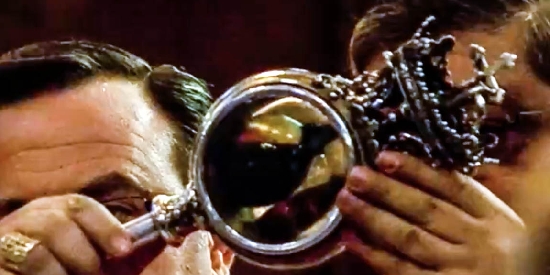
Short Summary: St. Januarius's blood, retained in a vial since his martyrdom in 305 A.D., miraculously liquefies three times a year on designated feast days.
Details
Location: Naples, Italy
Year: 2024
Prayer: Lord our God, Help us to love you will all our hearts, and to love all people as you love them. Soften our hearts, to help us overcome the stubborness and self-reliance that keep us from this love. We are your humble children. Teach us wisdom, so that we may properly love in all the different and difficult circumstances we face. Amen.
Verse: Do not worry about anything, but in everything by prayer and supplication with thanksgiving let your requests be made known to God. And the peace of God, which surpasses all understanding, will guard your hearts and your minds in Christ Jesus. - Phil 4:6-7
Full Story
Januarius, the first bishop of Benevento in Italy, was martyred in 305 A.D. Following his execution during the persecution of Christians under Emperor Diocletian, a portion of his blood was collected by an unnamed Christian woman and preserved in a small vial. This vial has remained in the custody of the Church, and the blood is kept in a dried and solidified state to this day. The vial, along with the bishop’s relics, is housed in the Naples Cathedral. Three times a year, the blood miraculously liquefies, a phenomenon that has fascinated and puzzled observers for centuries. The event is easily witnessed by all present, as the vial is gently rotated during the ritual. The first recorded instance of this miracle dates back to 1389, and it has been documented consistently ever since. Despite numerous scientific investigations, no natural explanation has been found for the liquefaction, which sometimes occurs within minutes and other times takes hours or even days. Theories surrounding the liquefaction of St. Januarius' blood have ranged from thixotropic gels, which change viscosity when stirred, to the possibility of hydrated iron oxide that resembles blood. However, these ideas have been dismissed due to the age of the relic and spectroscopic analyses conducted in 1902 and 1989 that confirmed the presence of hemoglobin, making it consistent with human blood. Despite these investigations, scientists have been unable to explain the phenomenon, and the unpredictability of its timing adds to the mystery. Occasionally, the blood does not liquefy at all, leading to a variety of interpretations. One famous instance occurred in 1944, when the blood did not liquefy just before the eruption of Mount Vesuvius, which devastated nearby villages. Many believe the failure of the blood to liquefy serves as a prophetic warning. This is one of the rare cases where the "lack" of a miracle grabs people’s attention!
Related Miracles
-
Related Miracle 1
Related Miracle 2
Related Miracle 3